


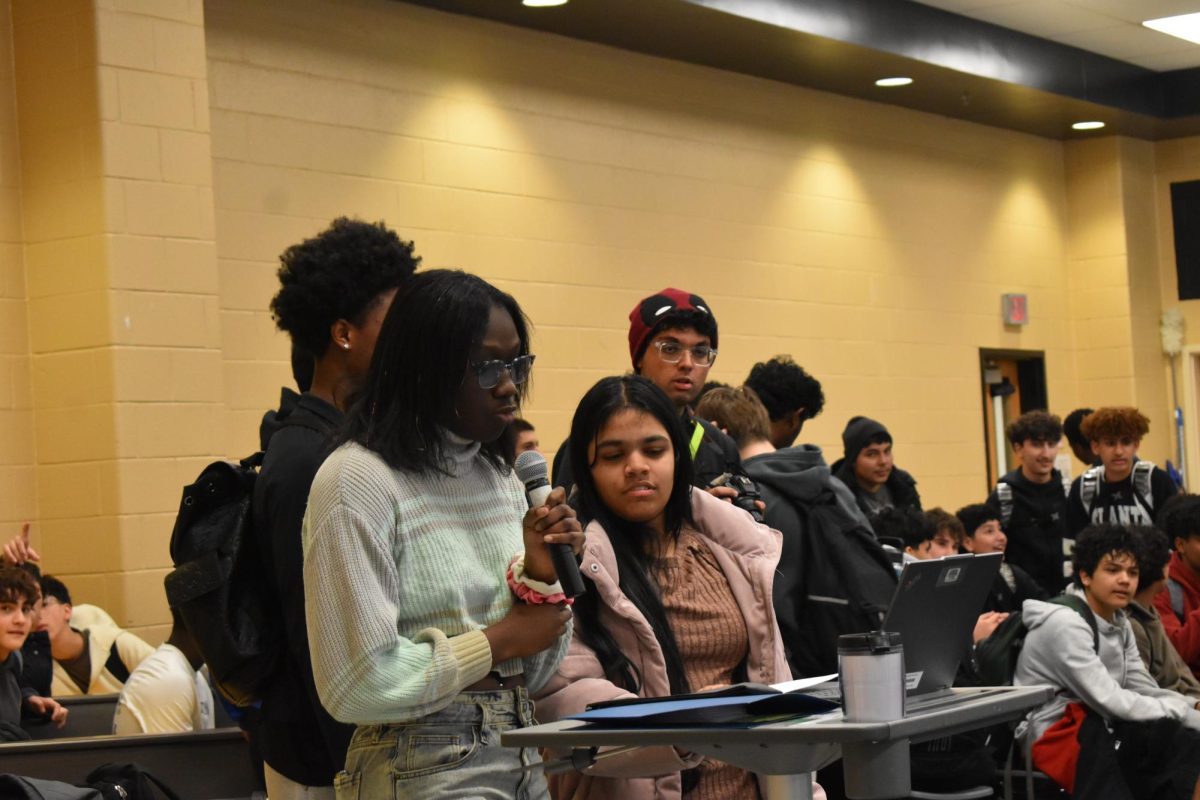





















Athletics are a highlight in the student culture at Freedom High School. Athletes are often recognized throughout the school, but sports managers are rarely mentioned. Managers are students that work behind-the-scenes, helping out coaches and athletes with practices and games. With so many different sports offered, managers often find themselves dedicating different amounts of time and carrying out different tasks for each sport.
“There’s about 16 or 17 volleyball managers,” said Hanya Eid, senior volleyball manager.
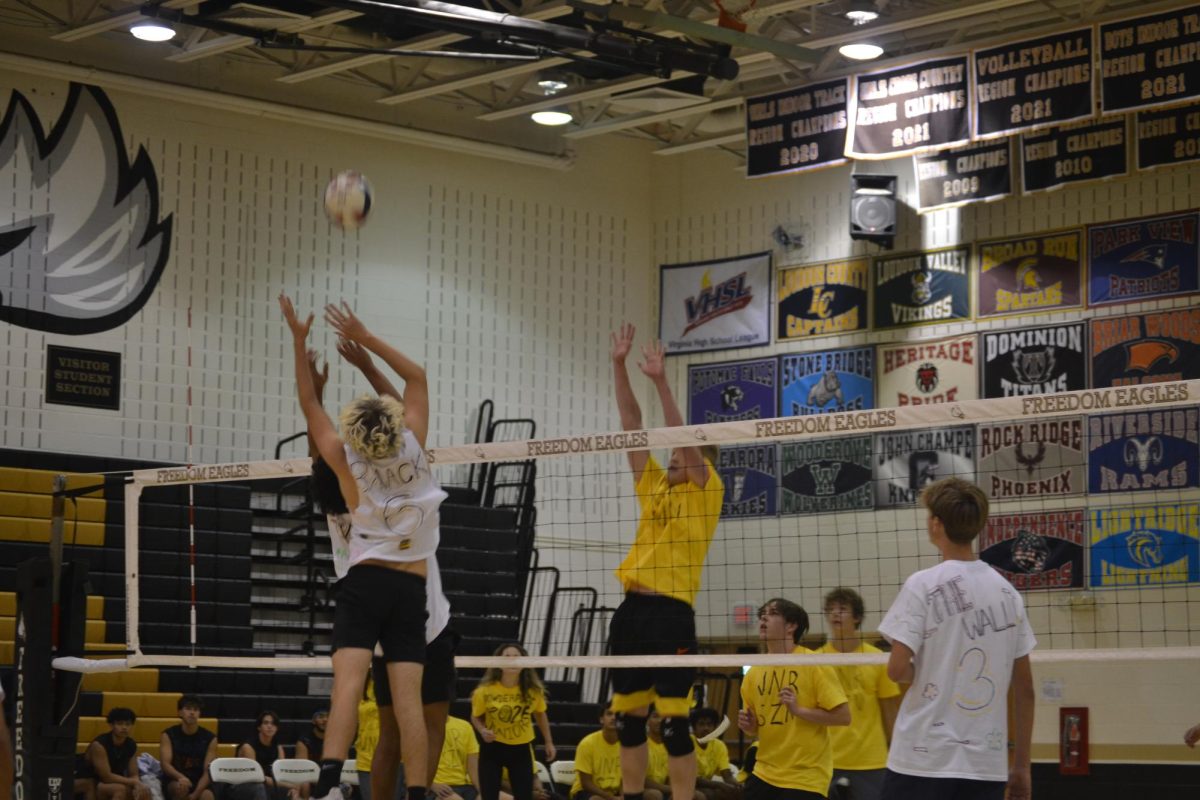
Three managers are needed at each level for every home game, while only one manager is needed at each level for away games. Six managers are typically working simultaneously for home games because Freshman and JV volleyball play at the same time. .
There are less managers for football, due to the precise number of managers needed for each section.
“There are about eight football managers,” said Emilia Hummell, junior football manager.
Football managers are divided into two sections: four underclassmen and four upperclassmen. The underclassmen focus on managing the freshman and JV teams, while also providing support during varsity games. The upperclassmen are dedicated varsity managers, responsible for handling most challenging tasks essential for the varsity game.
The number of managers is dependent on how demanding the responsibilities are for each sport.
“They want us to go to most games that we can sign up for, but we don’t have to go to every single practice,” said Lucas Andrade, senior volleyball manager. “It doesn’t take up a crazy amount of time, but you should still allocate a good amount of time, especially for varsity because they have five sets.”
Nets and volleyballs are only needed during practices. The coaches expect the players to put in the effort to fulfill the necessary duties for setup and cleanup, which include shagging balls, setting up nets and putting away equipment.
While volleyball managers have a flexible practice schedule, the schedules for football managers are much more different.
“We are expected to make it to every practice and game, but we are still able to attend extracurricular activities on non-game days when given permission from our coaches,” said Kiera Dennison, senior football manager.
Football managers are assigned specific duties, and their absences can lead to disorganization or an overload for the remaining staff. This consistent presence aims to ensure everything will run smoothing and keeps everyone on track. On non-game days with lighter workloads, managers are occasionally allowed to attend their extracurricular activities, honoring their commitments outside of football.
“Everyday as a manager we are expected to make sure that the team has equipment needed for practice,” Hummell said.
Each day, football managers are responsible for gathering all necessary equipment and setting up the practice field before the players arrive. This involves filling up water, bringing out the ball bag, pads bag, medical supplies and strategically placing the equipment around the field. After practice, managers ensure everything is cleaned up and returned to the proper storage.
Game days involve a lot more tasks.
“For home games, we are first tasked with making sure that pregame meals are laid, then we are tasked with setting up the camera, Hudl and other equipment.” Dennison said. “This is pretty much the same as away games, but for away games we have to make sure that everything is on the bus before we leave.”
A football manager’s pre-game setup is a hectic race against time. About two hours before kickoff, they’re on the field ensuring all equipment is ready, cameras are set to record and coaches’ headsets are functional. Simultaneously, they organize stats for in-game analysis. All this while keeping the team focused on their pre-game rituals.
Volleyball managers only need to perform three primary tasks during game days.
“There’s three different options that you can choose from as a manager. There’s libero tracking, scorebook and the physical score, where you change the score on the scoreboard,” Andrade said.
Libero tracking focuses on three players, libero and two middle blockers, and scoreboard consists of updating the score on the gym wall—both these tasks only occur during home games. The scorebook is needed for both away and home games. It overlooks the whole game, keeping track of substitutes, points and rotation. The manager responsible for the scorebook is the main source of communication between the table of managers and referee as well. If the scorebook is wrong, the game must be paused until everything is sorted out.
“I think managers are important because a lot of the small tasks play a big role in making sure the team is organized and working efficiently,” Hummell said.