






Many students, staff members and parents have raised concern regarding the new personal devices policy. The school board attempted to take into consideration the needs of students and educators when implementing the new policy.
“I don’t think the school board would need to or has to justify negative behavior, because this was something that they had to do,” said LCPS Superintendent Aaron Spence. “And I do think they went through a thoughtful and long process, and in fact, remained out of compliance, willfully, for lack of a better word, in order to go through that process.”
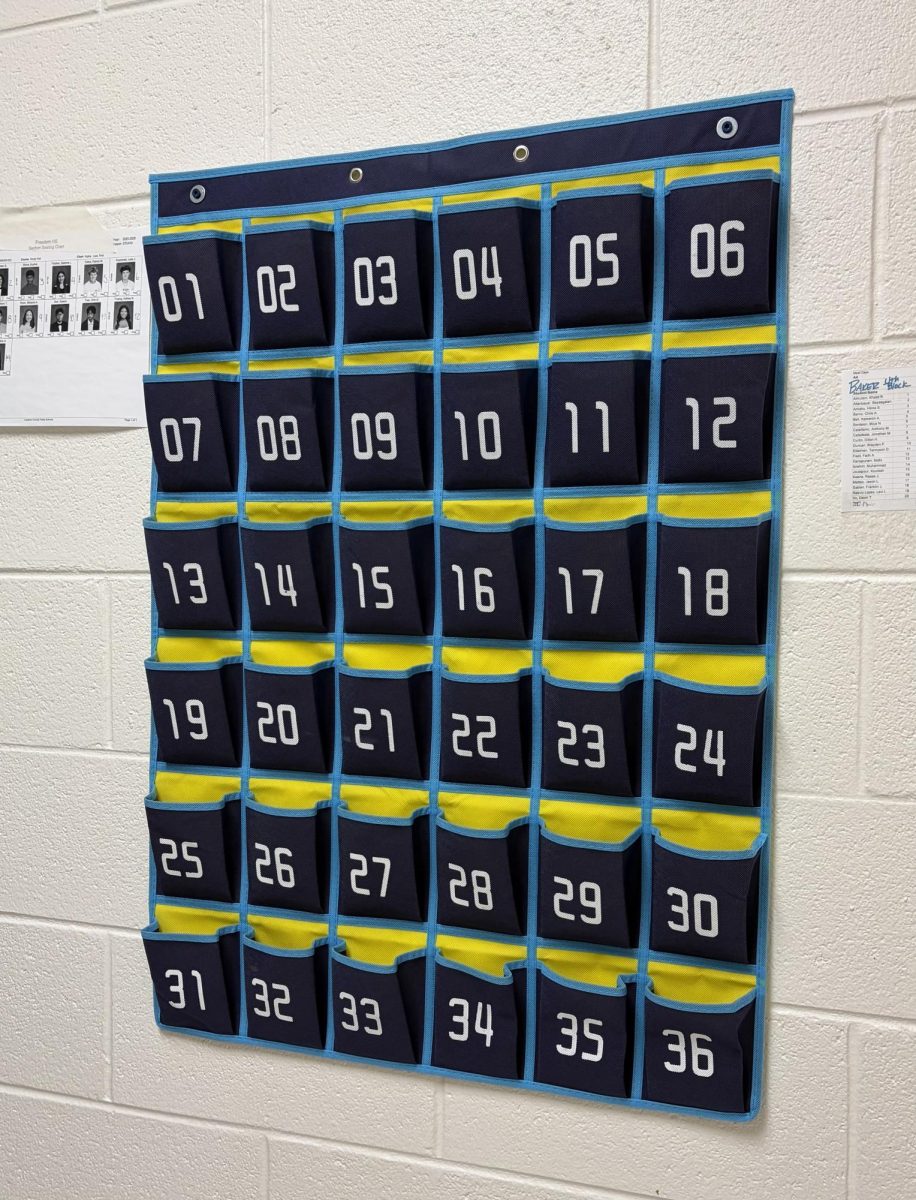
Loudoun County Public Schools were not in compliance with the Virginia law prohibiting the use of personal devices from “bell to bell” until Jan. 5, 2026. Before LCPS enforced the Virginia law, each high school had their own rules. At Freedom High School, students were required to put their phones in phone caddies before class. At the end of class, they would be allowed to get their phones and be on them during class change and lunch. Some classes incorporated phones in their instructional time, and that was permitted. Personal laptops were also permitted for most courses. Students’ ability to go on their phones during break and lunch has brought a lot of comfort and peace of mind to students.
“I just don’t think it’s fair that we don’t get it during break or lunch or transition time, because we deserve a break, too,” said FHS freshman Maahi Theraja. “There’s a lot of people that during lunch prefer to sit with their headphones in and just to listen to music and zone everyone out. My parents contact me through my phone. Now I can’t do that anymore, so I just think it’s a little difficult with the whole policy to do certain things.”
Loudoun County Public Schools offer many types of classes and programs. A lot of those programs require advanced technology beyond school-issued Chromebooks. Students’ personal devices help fill in those gaps. Personal devices were used often in different classes, and with the new policy, LCPS must find solutions and replacements to ensure students’ success in their classes.
“There was some conversation around the need to repurpose,” said Spence. “For example, digital cameras, because we were asking some students not to use their personal devices, which would include their personal computers, potentially needing to work with different teachers across different curriculum areas to see if any kind of specialized software or computers might be needed. This particularly came up in conversation around the academies.”
Students who are in advanced science classes or attend the Academies of Science typically take pictures of their lab report using their personal device. Without their personal devices, many students have resorted to using their school-issued computer. Some students have had trouble using their school-issued device but have no other choice.
“During labs, we aren’t allowed to use our phones to take pictures, because of this I have struggled to find a way to take needed pictures for my lab because the Chromebooks are super glitchy and don’t take clear pictures,” said FHS freshman Selin Muhammad.
Many music classes have previously relied on using personal devices to record needed pieces for various requirements. Students have resorted to using their personal devices due to convenience. Especially in music classes, using school-issued devices can cause many problems with connection and audio.
“In choir, sometimes when we’re recording major summatives, we use our phones because it’s easier to hold, but now we have to use our Chromebooks, and sometimes the Chromebook microphones just don’t work,” said freshman FHS Mia Aldao. “Because of this now you just have to work around it, which is hard.”
Students in some electives have relied on using personal devices to better succeed in the class. Classes such as theater, music and art. Before the new policy, personal devices have been used to replace school-issued devices in some classes. School-issued Chromebooks come with many limitations and personal devices help overcome those limitations. After the new policy was proposed, students were required to use their Chromebooks.
“The Chromebooks don’t connect to speakers,” said FHS senior Grayson Bray. “We have had to resort to using staff loners to connect to the speakers to play tracks and other music, instead of just being able to just play them [on Chromebooks]. So we’ve had to jump over hurdles and hoops to be able to practice and sing and stuff.”
Classes such as theater require a lot of physical media; phones and other personal devices have tremendously helped cut down on wasted paper. Classes that require the heavy use of physical media have successfully resorted to using their personal devices in the class prior to the new policy. After the new policy, many classes have had to start printing and using a lot of paper.
“We’re not allowed to use our phones [in theater class], [because of this] I’ve seen a return to more, like, physical media,” Bray said. “So there’s, like, a lot of printing, a lot of waste of paper.”
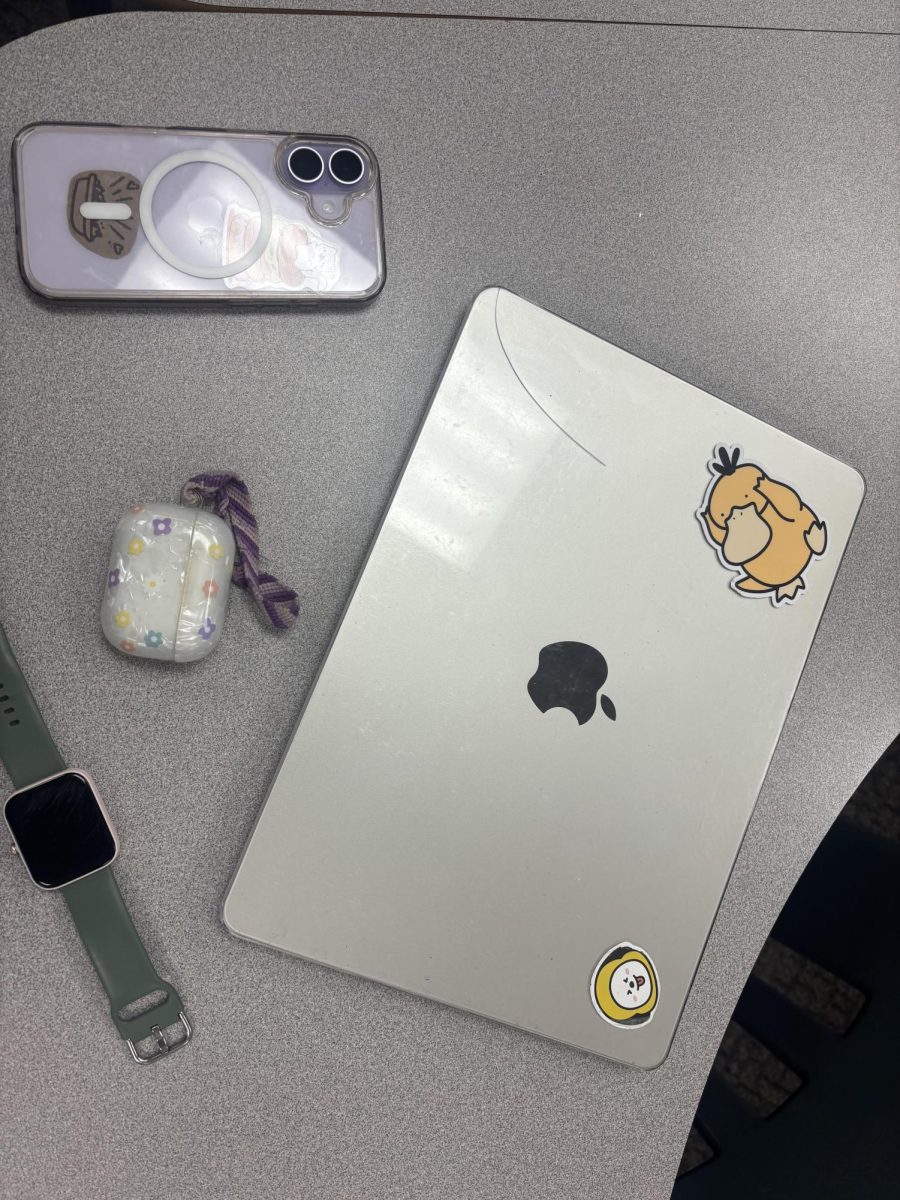
Students across the state of Virginia have been required to follow the new personal device policy. The policy states all personal devices including phones, laptops, smartwatches and AirPods are required to be put away the whole school day. Different parts of Virginia have enforced each device differently. At Freedom High School, many students used to use their MacBook for various courses.
“Before the phone policy I would use my MacBook for every class and I mostly used it for AP Research because some studies are blocked on the Chromebook and won’t let me access them but with a MacBook I can have a variety of different and new sources and incorporate them into my research,” said FHS junior Nidhi Ganapuram.
In other parts of Virginia, not many students use personal devices and resort to using the school-issued Chromebooks. Because of this, the enforcement on personal laptops was not as strict.
“Restrictions on personal computers like MacBooks are not enforced as much as the majority of our student body uses the school-issued laptops,” said Powhatan High School senior Collin Woods.
The LCPS School Board took into consideration the suggestions from the Student Advisory Council regarding the effects of the personal device policy. The positive impacts of the new policy were reflected by student leaders.
“I’ve heard from our Student Advisory Council and others, although they were certainly advocating to make sure we have the appropriate resources,” Spence said. “They also acknowledged that this has been good for our classrooms, and Student Advisory Council members have heard people say this has been really good for them at lunch; they’re talking to their peers, and they’re not feeling the pressure to be on their phones.”
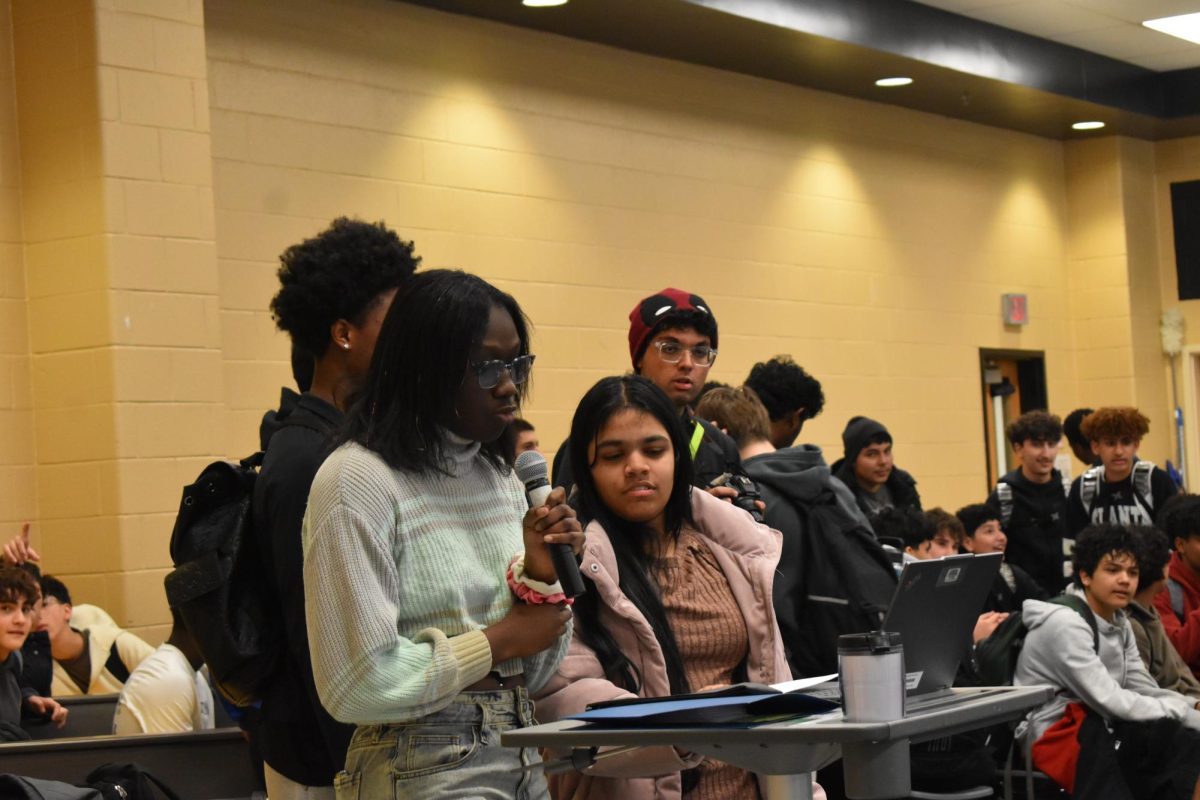
Student Advisory Council members had a meeting discussing the effects of the new personal device policy. Student representatives discussed the importance of having personal devices during break times and lunch.
“During the meeting regarding the new personal devices policy, Student Advisory Council members talked about the phone policy,” Theraja said. “It was very clearly stated by our principal that she just didn’t want phones during instructional time, but if it’s lunch, passing, or break, it’s fine, because students deserve a break as well.”
This is the second part of a two part series pertaining to the LCPS Policy 8655: Student Personal Device Use. Part one explored the reasoning behind the implementation of Policy 8655.