






















NASA sends Artemis II crew to travel into deep space for the first time in 50 years, in order to conduct a lunar flyby on a 10-day test flight. This mission tests deep-space systems, such as life support and navigation systems, and is key for future lunar exploration.
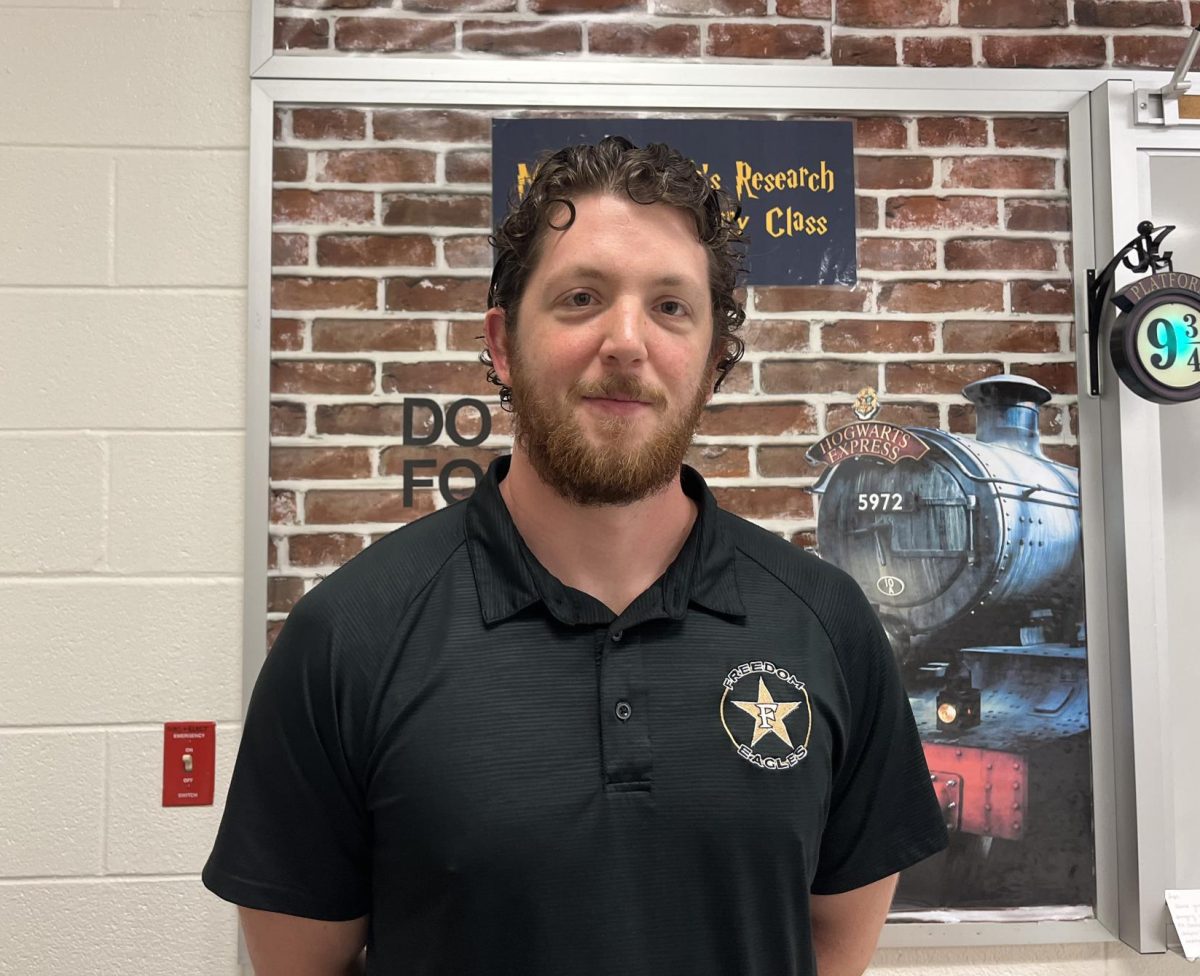
“We have completely different systems now, so I think it’s important that they run the test mission. For example, the launch was completely automated,” said Mike Thornton, science teacher. “Last time we did this, there weren’t really computers that we could have on board the spaceship. There were tiny ones that were sewn by hand with magnets and wires, which is a completely different thing to now.”
There are many differences from the first Apollo mission to the Artemis II, technology being a major one. During the Apollo missions, onboard systems and computers were less advanced and their functions were extremely limited. In contrast today, Artemis missions rely on automated systems which are much more advanced but also show why test runs are necessary when sending astronauts into deep space. Additionally, the reasons behind space exploration today are different from those of the 1960s and the Apollo missions.
“My view of the space race is that it is purely a battle between the public and private sector, and that there is much more collaboration between governments through the space programs,” said junior Sohum Josyula. “Even though it is the government funding these private companies, the competition is apparent.”
Competition exists not just between nations but also between public and private companies. Commercial space agencies have become more involved in space exploration and now there is collaboration as well as competition.
“The first time was very politically motivated. We needed a distraction, because America was not in such a good place with the whole cold war situation,” Thornton said. “We needed to rearrange people and redirect people’s attention.”
Today, the space race is not so much about competition, but is rather about the possibilities of future residence on the moon such as a lunar base. This just shows how far we’ve gotten from the Apollo missions and the Artemis is the first step to deep space exploration and expansion.
“Oh, they, 100% could have been allocated somewhere else. I don’t think they should have been.” Thornton said. “I think that it’s hard, because it’s planning for the far future, right? Eventually we’re out of space. When we’re out of space, what do we do?”
Billions of dollars have been spent on the mission, the development of the Orion spacecraft being one of them. This has led to doubts about whether the money should instead be allocated toward other issues on Earth, such as poverty or climate change.
“In order to eventually get to the place where we have to go, we need steps along the way, and this is one of those steps,” Thornton said.
Earth is facing challenges such as climate change, over population, and resource limitations so expansion beyond Earth has become a very important effort. Artemis is the first step in preparing for the future.