




In April 2025, Virginia passed a state law restricting the usage of personal devices throughout the entirety of the school day. After examining the state law, the LCPS School Board passed an updated Policy 8655 in December 2025 that complied with this new law. This policy was implemented across LCPS in January 2026.
“LCPS administrative staff, the school board, we had to go ahead and review a policy that we already had in place, which is Policy 8655,” said Dr. Sumera Rashid, the LCPS School Board member for the Little River District. “And so we had to make sure that any updates were in line with this new state law.”
In April 2025, Section 22.1-79.3:1 in the Code of Virginia was amended. This law states that school boards must implement policies that restrict cell phone and smart device possession on school property from bell to bell, applying to all students without accommodations.
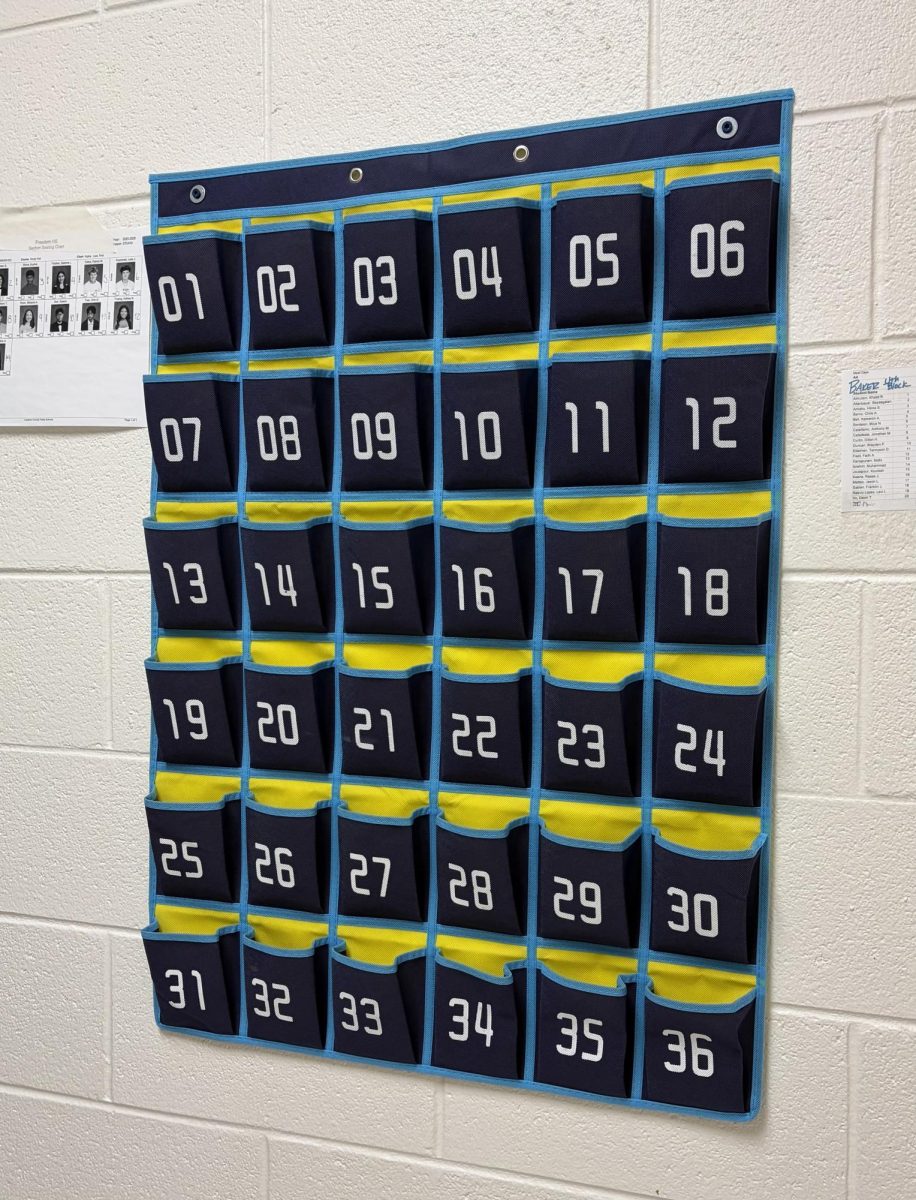
“Restriction is not the same thing as a ban,” said Jon Pepper, the LCPS School Board member for the Dulles District. “So first semester, we took restriction in the spirit of the word restriction, and that’s why you have those, the phone has to be off and away in those pouches but you can have it in between, because technically, what restrictions mean is we’re restricting your use of it during academic time. So after consult with the lawyers, they said the spirit of restriction really means ban, and so therefore we kind of shifted the policy.”
Prior to this updated policy, high school students were able to use their phones and other personal devices outside of instructional time such as lunch or class changes. They were also allowed to use their personal devices under the guidance of their teachers for educational purposes.
“One way I used personal devices was using my iPad for digital art,” said senior Irene Kang, who is currently enrolled in Art 4. “There were some programs that weren’t on school devices, such as Procreate. Having access to personal devices helped bridge that gap.”
Many other counties in Virginia implemented their own updated phone policies in accordance with Virginia’s Law much earlier than LCPS. Counties like Prince George’s County and Fairfax County changed their policies as early as January 2025, leaving LCPS as one of the last Virginia counties to update their phone policy.
“We had to get the community input before we put this [policy] out for staff,” Rashid said. “You can’t just take a policy and throw it in, even after you get the feedback. It has to follow a specific procedure.”
The Virginia Law requires schools to allow students with an Individualized Education Plan (IEP), Section 504 Plan, individualized health care plan, or a Limited English Proficiency plan to use their personal devices in accordance with their individual accommodations. Accommodations like IEPs, Section 504 Plans or individualized health care plans are confidential and only need to be shared with staff that have a legitimate educational interest.
“A lot of people were also concerned about the fact that students with IEPs and 504s are still allowed to use their devices, but when you take the devices away from everyone else, they kind of lose their privacy about their IEPs and 504s,” said April Chandler, the LCPS School Board Chair and the Representative for the Algonkian District. “If no one else in that room is allowed to have it, then it’s more that students lose their privacy about whether or not they have an IEP.”
Although there were some concerns regarding the new LCPS phone policy, the Virginia law required all school boards to implement policies in accordance with the law.
“The fact of the matter is that this is a state law, and the board was out of compliance,” said Dr. Aaron Spence, Superintendent of LCPS. “And their vote in December brought the board into compliance and brought, not the board, but brought the school division into compliance and brought its policies into alignment with state law.”
Following this new policy change, there was discussion about the effects of smartphones on adolescents. According to the Columbia University Department of Psychiatry, smartphones and social media have been shown to negatively impact things like sleep deprivation, depression and a distorted sense of self.
“Based on what we’ve seen and learned in terms of the science behind what happens to your brain when you’re using a cell phone … there’s a lot to be said for this change that will probably be positive,” Chandler said. “But when I come back to it, just myself as a voting member, I wonder if we are doing a disservice. I don’t believe this technology is going to go anywhere. And so maybe we could serve our students better by ensuring that they understand how to be responsible with this technology, as opposed to just saying, ‘you can’t have it while you’re at school, but good luck when you go to college.’ Because nobody’s going to tell you what to do when you get to college.”
This is the first part of a two part series pertaining to the LCPS Policy 8655: Student Personal Device Use. Part two will explore students reactions and struggles to the implemented policy.